Showing posts with label quality first. Show all posts

Sunday, 24 March 2013

Logistic – Transformed Quality of Civilization


Logistic – Transformed Quality of Civilization

by: Edly Ramly


How Ancient Civilisation becomes stronger?
How Islamic religious spread quickly around the word?
How British Empire expanded?
How giant economy stimulate?
It all lies into LOGISTICS AND TRANSPORTATION development and improvements!

In ancient Greek,  Roman and Byzantine empires, military officers with the  title  Logistikas  were responsible for financial and supply distribution matter (1). The historical leaders Caliphate Uthman, Hannibal Barca, Alexander the Great, and the Duke of Wellington are considered to have been logistical geniuses. They are a master of growth and globalization.


Before any civilisation occurs, the people normally survive by daily hunting and when the resources scarce, they move to other area. This sometimes called as nomads. Then the leader start to realised that it is tough to survive that way. They start to keep stocks of their foods. That is the start of logistics. Sometimes it not sufficient and they know people from other tribe have some extra. So they start to trade or conquered. That where the logistic begins. The storage and transportation improve their quality of life.

Ancient civilisation such as Macedonia, Babylon and Egypt build the logistics infracture in order for them to build the city and castles. They first used human powered transport is the transport of people and/or goods. Then Animal-powered transport is the use of working animals for the movement of people and goods. Humans may ride some of the animals directly, use them as pack animals for carrying goods, or harness them, alone or in teams, to pull sleds or wheeled vehicles. Indeed with this mode of logistic develop the civilisation but it is in slow states.

However, there few other mode of transportation they can opt depending on their geographical location. Of course the common mode is land and water.

The first earth tracks were created by humans carrying goods and often followed game trails. Tracks would be naturally created at points of high traffic density. As animals were domesticated, horses, and donkeys became an element in track-creation. With the growth of trade, tracks were often flattened or widened to accommodate animal traffic. Later, the travois, a frame used to drag loads, was developed. Animal-drawn wheeled vehicles probably developed in Sumer in the Mesopotamia (or modern Iran today) in the 4th or 5th millennium BC and spread to Europe and India in the 4th millennium BC and China in about 1200 BC. The Romans had a significant need for good roads to extend and maintain their empire and developed Roman roads. The Persian and Roman empires built stone-paved roads to allow armies to travel quickly. Deep roadbeds of crushed stone underneath ensured that the roads kept dry. The medieval especially during Caliphate Umar later built tar-paved roads. All this remark to their skill in improving logistic.

For water modes, the stone ages primitive boats developed to permit navigation of rivers and for fishing in rivers and off the coast. It has been argued that boats suitable for a significant sea crossing was necessary for people to reach Australia an estimated 40,000-45,000 years ago. With the development of civilization, bigger vessels were developed both for trade and war. In the Mediterranean, galleys were developed about 3000 BC. Galleys were eventually rendered obsolete by ocean-going sailing ships, such as the Arabic caravel in the 13th century which first initiate by Caliph Uthman in order to encourage trade and war against Roman., the Chinese treasure ship in the early 15th century, and the Mediterranean man-of-war in the late 15th century. In the Industrial Revolution, the first steamboats and later diesel-powered ships were developed. Meanwhile specialised craft were developed for river and canal transport. Canals were developed in Mesopotamia c. 4000 BC. The Indus Valley Civilization in Pakistan and North India (from c. 2600 BC) had the first canal irrigation system in the world. The longest canal of ancient times was the Grand Canal of China. It is 1,794 kilometres (1,115 mi) long and was built to carry the Emperor Yang Guang between Beijing and Hangzhou. The project began in 605, although the oldest sections of the canal may have existed since c. 486 BC. Canals were developed in the Middle Ages in Europe in Venice and the Netherlands. Pierre- Paul Riquet began to organise the   construction of the 240 km long Canal in France in 1665 and it was opened in 1681. In the Industrial Revolution, inland canals were built in England and later the United States before the development of railways.

Exponential Growth of Civilisation

Most of the modern developed countries especially in Europe have the comprehensive link and network of canal. By having the organized link of canal, more and more village was developed and goods can be transport to the nearest port or vice versa. This network of canal is start to be build as early 16th and support the industrial revolution is 18th centuries.
However the rail transport were found to be more effective in improving quality of civilisation.The history of rail transportation dates back nearly 500 years, and includes systems with man or horse power and rails of wood (or occasionally stone). This was usually for moving  coal  from  the mine down to a river, from where it could continue by boat, with a flanged wheel running on a rail. The use of cast iron plates as rails began in the 1760s, and was followed by systems (plateways) where the flange was part of the rail.Modern rail transport systems first appeared in England in the 1820s. These systems, which made use of the steam locomotive, were the first practical form of mechanized land transport, and they remained the primary form of mechanized land transport for the next 100 years.Again, the developed modern civilisation mastered the art of railways and they have vast network of rail.

The real exponential growth of quality of civilisation was the introduction of aviation losgistic and transportation. During the 17th and 18th century, when scientists began analysing the Earth's atmosphere, gases such as hydrogen were discovered which in turn led to the invention of hydrogen balloons.Various theories in mechanics by physicists during the same period of time—notably fluid dynamics and Newton's laws of motion—led to the foundation of modern aerodynamics.

Logistics infrastructure change the geography and quality of civilisation

White electric train with red cheatline emerging from tunnel in the countryside
InterCityExpress, a German high-speed passenger train
Infrastructure is the fixed installations that allow a vehicle to operate. It consists of both a way, terminal and facilities for parking and maintenance. For rail, pipeline, road and cable transport, the entire way the vehicle travels must be built up. Air and water craft are able to avoid this, since the airway and seawaydo not need to be built up. However, they require fixed infrastructure at terminals.
Terminals such as airports, ports and stations, are locations where passengers and freight can be transferred from one vehicle or mode to another. For passenger transport, terminals are integrating different modes to allow riders to interchange to take advantage of each mode's advantages. For instance, airport rail links connect airports to the city centers and suburbs. The terminals for automobiles are parking lots, while buses and coaches can operates from simple stops.[13] For freight, terminals act as transshipment points, though some cargo is transported directly from the point of production to the point of use.

Conclusions

Any civilisation always start with their logistic wills and development. Humans' first means of transport were walking and swimming. The domestication of animals introduces a new way to lay the burden of transport on more powerful creatures, allowing heavier loads to be hauled, or humans to ride the animals for higher speed and duration. Inventions such as the wheel and sled helped make animal transport more efficient through the introduction of vehicles. Also water transport, including rowed and sailed vessels, dates back to time immemorial, and was the only efficient way to transport large quantities or over large distances prior to the Industrial Revolution.
Until the Industrial Revolution, transport remained slow and costly, and production and consumption were located as close to each other as feasible. But we saw most of either ancient, mid age of 18th centuries civilisation upgrade their logistic capability and those who upgrade faster become survivors.
The Industrial Revolution in the 19th century saw a number of inventions fundamentally change transport. With telegraphy, communication became instant and independent of transport.
The history of logistic is largely one of technological innovation that improve the quality of civilisation. Advances in technology have allowed people to travel farther, explore more territory, and expand their influence over larger and larger areas. Even in ancient times, new tools such as foot coverings, skis, and snowshoes lengthened the distances that could be traveled. As new inventions and discoveries were applied to transportation problems, travel time decreased while the ability to move more and larger loads increased. Innovation continues today, and transportation researchers are working to find new ways to reduce costs and increase transportation efficiency.


Friday, 4 January 2013

2013 BEST in QUALITY, BEST in COST

BEST 2013

Happy new year 2013. We wish you all BEST, BEST in HEALTH, BEST in LIFE

Let make our PRODUCT and SERVICE as best in Quality


B RIGHT Intelligent (IQ) – Improved our knowledge and intelligent in Cost and Quality

E MOTION Intelligent (EQ) – Managed our emotion to be the best in Quality

S PIRITUAL Intelligent (SQ) – Always Value add

acT ion – Take Action to be the BEST

Be the BEST in QUALITY and COST


-CER-

Sunday, 16 December 2012

LEAN Dream - Automotive Plant

Lean Automotive Plant

Ni saje je berangan.. (Just dreaming)


Colour by  nurin Eqma Leena bt Edly (7 years old)


-CER-

Tuesday, 4 December 2012

LEAN - Step 2 Identify Waste

Strategi Penghapusan PEMBAZIRAN - Langkah 2 - Mengenalpasti pembaziran

Untuk mengenalpasti pembaziran, ada beberapa alat (tools) dan teknik yang boleh digunakan. Tanpa Tools dan teknik, proses penegnalpastian boleh dilakukan juga. Tetapi ia mungkin tidak berapa efektif dan sukar untuk mendapatkan gambaran tentang dimana pembaziran berlaku, kenapa ia berlaku dan "how severe is it"

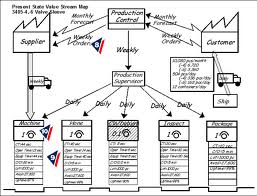
Teknik yang terkenal adalah teknik "Value Stream Mapping" yang diperkenalkan oleh Mike dan Rother didalam buku bertajuk "Learning to See".


Tool 1

Value stream mapping menngunakan kombinasi:
1) Carta aliran proses
2) Aliran maklumat
3) Maklumat berkaitan 

- Masa Proses
- Masa Menunggu
- Jumlah invetori sebelum dan selepas proses
- Yield (ataupun Complete and Accurate)
- Bilangan tenaga kerja
dan berbagai lagi

Tool 2 = Process Mapping

Proses mapping adalah teknik analisa yang lebih detail untuk MASA sesuatu proses dijalankan. Teknik ini selalunya digunakan apabila proses di dalam VSM menunjukkan masa yang panjang diperlukan untuk menyiapkan sesuatu.

Proses mapping akan memecahkan proses kepada proses-proses yang lebih kecil supaya setiap proses itu boleh dikenalpasti pembazirannya.


Tool 3 = Spaghetti Diagram

Antara tools yang disukai ramai adalah spaghetti diagram. Diagram ini digunakan untuk mengenalpasti waste of motion dan conveyance didalam satu-satu kawasan.


Ada beberapa lagi tools yang boleh digunakan. Tetapi yang penting adalah pembaziran dapat dikenalpasti, digambarkan dan mudah untuk dibentangkan.


Seterusnya pembaziran ini perlu di labelkan. Biasanya dilabelkan dengan bintang letupan. Langkah seterusnya ialah... HAPUSKAN pembaziran tersebut

-CER-


Sunday, 2 December 2012

Apa itu LEAN?


Perkataan “Lean”  menjadi terkenal apabila Womack dan Jone menerbitkan buku “Lean Thinking” pada tahun 1996. Perkataan Lean digunakan  bukan bermaksud ... sandar. Jika kita lihat kamus bahasa Inggeris, Lean juga bermaksud KURUS. Kaitan kurus, adalah menjalankan aktiviti dengan secara SLIM dan tak berlemak.

Lean dalam konteks kualiti dan kos bermaksud “EFISYEN”. Efisyen bermaksud menjalankan aktiviti dengan mengoptimakan sumber, termasuklah masa, sumber manusia, tenaga dan juga kewangan. Dalam masa yang sama, memenuhi kehendak pelanggan dan meningkatkan kepuasan pelanggan.


Apakah MATLAMAT utama LEAN

Matlamat utama lean ada MENGHAPUSKAN pembaziran. Sbelum perkataan lean digunakan, teknik yang sama digunakan oleh Lean adalah TPS ataupun Toyota Production System. TPS telah diamalkan oleh pihak Jepun semenjak tahun 60 an kerana mereka kekurangan sumber, termasuklah tanah dan sumber asli. Jadi mereka kena memikirkan bagaimana untuk mengoptimakan sumber-sumber yang ada.


Apakah PEMBAZIRAN  (WASTE) yang ada didalam operasi

Teknik VAVE (value analysis dan value engineering) memfokuskan  rekabentuk dan pembangunan (design dan development) untuk produk, manakala LEAN memfokuskan kepada operasi.
Ada TIGA jenis pembaziran  proses yang mudah untuk di INGATI iaitu
WAIT (TUNGGU)
CHECK (SEMAK)
MOVE (GERAK)


Manakala TOYOTA pula memperkenalkan 7 jenis Pembaziran iaitu, Wait, Over-produce, Motion, Rework, over-proses, inventory dan conveyance (ataupun transpirt). Ada yang menambah pembaziran Maklumat )Information) dan berbagai lagi.

Apakah STRATEGI Lean.

Jika mengikut  Lean Thinking” ada 5 strategi. Tetapi saya lebih suka meringkaskan strategi LEAN kepada TIGA iaitu:
1     1) SEDAR wujudnya PEMBAZIRAN
       2) KENALPASTI Pembaziran itu dimana
       3) HAPUSKAN atau KURANGKAN pembaziran tersebut
Ada berbagai teknik dan alat (tools) yang boleh digunakan sperti menggunakan VSM, Poka YOKE, 5S dan lain-lain lagi.

SUDAHKAN anda melaksanakan LEAN. Keran apembaziran itu adalah AMALAN SYAITAN
Salam hormat dari saya
\
-CER-

Di Sedenak, (untuk berfikir  sejenaka)  Kulai

Workshop LEAN di Suzhou - Tahun 2001 kot

He he he... terjumpa gambar lama. Dalam banyak-banyak worksyop LEAN, ni je gambar yang jumpa... macam kelakar pulak tengok gmbar muda-muda dulu...


Dulu buat worksyop, kena hand-on sekali..

 Entah faham ke tak pakcik ni...

Tangga buluh tu... he he

InsyaAllah, saya kongsikan apa itu Lean dan bagaimana melaksanakan lean...

-CER-

MINGGU LEAN

Minggu ni, saya ingin berkongsi sedikit tentang LEAN. Lean adalah antara bidang kepakaran saya selepas audit sistem pengurusan.

Lean antara antara bidang kerjaya saya yang pertama setelah dilantik sebagai Pegawai Promosi Lean pada tahun 2000. Walaupun sebelum itu saya tidak pernah dengar tentang Lean, saya bertuah kerana diberi kepercayaan untuk mempromosikan Lean untuk TRW (sebelum ini dikenali sebagai LUCAS) bersama mentor saya Mr Tom Draper daripada TRW US dan juga sahabat darupada plant-plant TRW yang lain termasuklah En Halim Baharom daripada TRW Bkt Beruntung, Ji Hong daripada Suzhou dan ramai lagi sahabat-sahabat yang lain dari seluruh pelusuk dunia.

Bersama pakar-pakar LEan daripada APO 

Syukor, pada tahun lepas, saya bersama MPC Wilayah Pantai Tinur dapat melancarkan program LEAN kepada PKNP (PErbadanan Kemajuan Negeri Pahang) dan kemudian bersama-sama dengar pakar-pakar Lean yang lain daripada Jepun untuk bersama-sama menjadi mentor dan speaker untuk Lean Seminar untuk PENGURUSAN HOSPITAL di Iran.


Tahun ini, saya dapat bersama-sama dengan pengarah dan pegawai-pegawai MPC (Malaysia Productiviti Corporation) untuk berkongsi dan membangun pakar serta modul berkaitan Lean.


Minggu ini pula dalah minggu yang istemewa kerana saya dapat bersama-saya dengan Pengarah dan kakitangan Pejabat Tanah dan Galian negeri Perak untuk Taklimat Lean pada perhimpunan PTG PErak kali ke-8. Selepas itu saya berkongsi pengalaman dengan kakitangan Pejabat SUK negeri Pulau Pinang di Dewan Seri Pinang untuk sessi  kursus lean.

InsyaAllah, saya akan kongsikan jugak, idea perlaksanaan lean dalam penambahbaikan Sistem Penyampaian PErkhimatan Awam. Mula-mula saya kan kongsikan apakah itu Lean.

Selamat membaca.


-CER-
29 Nov 2012
Dewan Sri Pinang, Pulau Pinang

Wednesday, 28 November 2012

KKK - Berkampung di Penang

Kualiti Kedai Kopi... minggu ni lepak 3 hari di George Town, Penang, Malaysia. Biasa dok kat Juru, Prai, kali ni dok kat pusat bandar. Apa-apa pun tahniah buat skuad Malaysia, dapat menundukkan Laos 4-1 sebentar tadi, semoga next game... lagi kelas. Balik ke cerita Penang tadi, ada beberapa perkara yang best kat sini:

1) Nasi Kandar Beratuq memang kick 

2) Tourist boleh tahan ramai (ekonomi dan income sure baguih punya)

3) Dapat pakai Penang Free Wifi (jimat data pakej aku)

4) Kali pertama bagi training untuk Pejabat SUK untuk perlaksanaan LEAN (team diorang memang proaktif, banyak idea penambahbaikan sistem penyampaian diterima oleh mereka - Aku orang Johor pun tak pernah kena jemput utk cadangkan perlaksanaan lean utk state administration)

5) dan ada byk agi yang best


Cuma ada sikit pandangan, untuk penambahbaikan KUALITI hidup masyarakat kat sana:

1) Sistem pengangkutan awam, kalau ada sistem MRT ke, monorail ke lagi baguih. Yang penting dari seberang ke pusat2 utama di Pulau. Buat jambatan kedua pun tak selesai masalah jam, tambahlah berapa banyak lebuhraya pun takkan settle.

2) Pejabat pentadbiran negeri, termasuklah SUK, DUN elok buat kat tanah besar, seperti Bertam ke. Georgetown patut fokus kepada pelancungan heritage, bukan pentadbiran negeri.

3) Lepak kat Jalan Masjid Kapitan Kling, jumpa banyak homeless dan pengemis. Lebih baik, bawak diorang gi pusat shelter yang bersesuaian. Merosakkan imej bandar jek dan jugak negeri.

4) Tempat pejalan kaki, longkang boleh diperbaiki lagi... banyak yang tiba-tiba hilang arah (negara maju biasanya tempat pejalan kaki diorang detail dan tak hilang tiba-tiba)...

Ni je yang terlintas malam ni.

Blurp.. sendawa lepas bedal nasik kandar lepas tengok bola tadi.... selamat malam semua

-CER-

Dari kota heritage Georgetown Penang


Sunday, 18 November 2012

Quality 1st - Defining Quality

There are few interesting statement on Quality on one of the factory that I visit i.e.

"MAKE PEOPLE FIRST BEFORE MAKE PRODUCT"

"Imagine Quality without U and I" ............... QALTY ... some people say it is FAULTY


U (you) and I mean the quality cannot be achieved without people. That why the definition of quality should start with:

ATTITUTE

APTITUTE (KNOWLEDGE)

SPECS/ STANDARDS

CUSTOMER SATISFACTION

Just think about it.... Good night

-CER-

Monday, 12 November 2012

Quality FIRST ! I am not agreed :)


Adakah KUALITI keutamaan NOMBOR 1 organisasi anda? Jika anda pengamal Kualiti sudah tentu jawapannya YA. Tetapi pengamatan saya sebagai “QUALITY PREACHERS” lebih dari 10 tahun dan juga USAHAWAN lebih dari 6 tahun, kualiti adalah nombor 2. Jadi apakah menjadi NOMBOR 1. Jawapannya adalah kebolehan PEMASARAN ataupun MARKETING. ANDA SETUJU?

Setiap perniagaan memerlukan pemasaran yang efektif. Ambik contoh AIRASIA, ramai yang memberikan maklumbalas negative pada awal operasi (terutama dalam 3 tahun pertama operasi) seperti, penerbangan selalu CANCEL, LEWAT, tidak dapat makanan dsbg. Target mereka pada masa itu adalah untuk SURVIVE dan dapatkan pelanggan seramai yang mungkin. Selepas itu barulah mereka menambaikan KUALITI atau mutu perkhidmatan mereka. APA pandangan anda tentang AIRASIA sekarang?

Contoh kedua adalah Negara JEPUN pada tahun 60an, Korea 80an dan China baru-baru ini. Pada tahun 60an, Jepun mengeluarkan produk berkualiti rendah seperti kereta, berbanding dengan produk keluaran Eropah dan Amerika. Teringat kata pakcik saya, Ini kereta TIN SUSU. Cuba amati apa yang mereka hasilkan pada penghujung 80an.. masih TIN SUSU lagi ke?

Mungkin masih ada organisasi yang meletakkan KUALITI menjadi keutamaan dari awal lagi dan masih survive seperti MERCEDES BENZ dan SINGAPORE AIRLINE. Tetapi jika anda baru di dalam bidang PERNIAGAAN, adalah lebih baik fokuskan pada pemasaran terlebih dahulu dan perbaiki kualiti dari masa kesemasa.

Saya ada berkongsi mengenai strategi Kualiti dan Kos di http://cqreview.blogspot.com/2012_01_01_archive.html.
Kesimpulannya samada anda setuju ataupun tidak, ianya berdasarkan strategi perniagaan anda. SAMA-SAMAlah kita SEIMBANGKAN FOKUS kepada KUALITI.

Coretan: Cikgu Edly